Thursday, 27 July 2017

John Updike's, 'Should Wizard Hit Mommy?' is about a clash of World-Views


John Updike's Should Wizard Hit Mommy is an important short story that deals with the theme of Generation Gap resulting in a clash of worldviews. The story stresses how the family as a base unit, is an important support structure, and this is what children should know. Friends who run away because one doesn't conform to their ideals, in this case, the foul smell of Roger Skunk, don't deserve to be called friends. By the end of the day, Roger Skunk has to return home to his mother and father, and it is his mother who asks him why he smells so awful! The central theme of this lesson is based on the relations between children and their parents and vice versa.
Jack wants to tell her through the story of Roger Skunk that one should not change how nature has made one to be, that too for the sake of friends who run away. He views the lessons of life through the lens of experience. He wants to convey to his daughter that it is OK to be who you are, it is alright to be your authentic self, in due course of time, your friends will accept you as you are. He wants to tell her that parents know what is best for their children because they love their children a lot. He wants to convey to her the message that there are no instant solutions to the problems in life and that in fact, magic is not a solution because it does not work, after all, if magic had been effective, why did the wizard not use his magic to tidy his own house?
Jo, however, doesn't accept her father's perspective because she thinks differently from him. She believes that there are instant solutions for the problems in life like changing the smell of a skunk into the smell of roses. After all, from her point of view, Roger Skunk's friends accept him and they play all day. By the end of the day, however, (and Jack introduces a twist in the tale) Roger Skunk's mother thinks Roger Skunk's Rose Scent is awful. Jo had not anticipated such a complication. She doesn't like such an ending because it challenges her worldview.
John Updike does not give the story an ending. He leaves the story open-ended. Jo will not accept her father's point of view, and Jack will not accept his daughter's point of view. They have arrived at a stalemate. Generation gap results from a clash of world views and perspectives between two people belonging to different age groups. The younger person thinks the elder person to be a preacher, someone who really doesn't know about the world. The child, in this case, doesn't respect her father's wisdom. The elder person, on the other hand, is not ready to accept that the younger person has every right to think differently. The father doesn't realise that his daughter is growing up, and having a distinct perspective is a sign of growing up. 
Should Wizard Hit Mommy describes the process of growing up in a child. The poem Childhood by Markus Natten very clearly describes that cognitive development taking place in Jo in the following lines:

          When did my childhood go?
          Was it when I found my mind was really mine,
          To use whichever way I choose,
          Producing thoughts that were not those of other people
          But my own, and mine alone.

The extract from the poem, Childhood clearly addresses the issue of growing up, and it suggests that children will often have a point of view that differs from that of their parents. It is however alright for children to have a different point of view!
This doesn't necessarily mean that children don't respect or consider their parent's point of view, rather, it is about developing a culture of trust, understanding, and tolerance and respect for divergent views. Jack's message is not morally wrong, but then the way it is conveyed is wrong. Jack doesn't like being interrupted, he likes women to be 'apprehensive, hanging on his words. He has a rather bossy kind of attitude towards others, and this is evident in the way he rebukes and warns his daughter each time she tries to divert the story towards her point of view. Finally when Jo gets perplexed and states ' "But the other little amum..."' (after Jack tells her that "Roger skunk did not smell of roses anymore.") He rebukes her, "Joanne. It's Daddy's story. Shall Daddy not tell you any more stories?" ' The first two sentences are very short! The first is just one word, and the second is just four words such as a Boss would use while instructing his workers in very strict terms.
What makes matters really bad is that both of them, Jack and his daughter Jo are not ready to accept or respect the right of each to express his own or her own point of view. They are so rigid in their stance, they just cannot listen to the other speak!
Elizabeth Jennings very succinctly describes how a clash of world views leads up to a breakdown in relations between a father and his son in the poem Father to Son:


        We speak like strangers, there's no sign
        Of understanding in the air.

        We each put out an empty hand,
        Longing for something to forgive.

The only solution is to develop an atmosphere of trust, understanding and respect for each other in the family. A Boss at work can simply not behave like a Boss at home. In the same way, a child should give her parents respect because they love her and know what is best for her!


Textbook Questions and Answers

1. What is the moral issue that the story raises?

One moral issue raised by the story revolves around respect for one another. It is about respecting diversity and each other's points of view. Children need to respect their parents for the wisdom they carry because of their experience in life and parents need to appreciate their children's differing perspectives.
In this lesson, both Jack and Jo are not ready to accept the other's perspective regarding whether the Wizard should hit Mommy or Mommy should hit the Wizard. Jo wants Roger Skunk to smell of roses because according to her, Roger Skunk would be able to make lots of friends. Jack, however, wants Jo to understand that it is the skunk smell that make Roger a skunk and that ultimately Roger's friends would get used to the smell.
Another moral issue raised by the story is associated with our tampering with nature. How ethical is it really to change the way you smell? Was it ethical for the wizard to change Roger Skunk's smell to that of Roses? Roger Skunk's mother hit the Wizard with the umbrella because he had "all the nerve" to change his smell.
If one looks into the matter in depth then one realises that nature has made us what we are and how we are, and it is not right to play God in these matters. In the long term, Roger Skunk would no longer be a Skunk. He would neither be a Skunk nor would he be a Rose and this in itself would have pushed him into an identity crisis, something worse than what he was facing when his friends ran away from him because of his Skunk smell.

2. How does Jo want the story to end and why?

Jo is a little girl who is growing up. She is beginning to understand and relate to the actual world. She has begun to distinguish between fact and fiction. She is undergoing 'a reality phase' but then is still fascinated by the possibility of magic existing as a possible solution to the problems one faces in life. It is exactly for this reason that Jo wants the story to end with the Wizard hitting Mommy, and Roger Skunk smelling of Roses.
Jo, has limited experience and for her, at this stage of life, friends mean more to her. She is troubled that Roger Skunk's friends run away because of his bad smell. It is important, therefore, for Roger Skunk to address the issue of bad smell according to her. She believes that the smell of roses will help Roger Skunk have many friends.
Ultimately it is all about perspectives, and for Jo, a sure shot, and an instant solution is for Roger Skunk to visit the Wizard and get a magical solution to the smell problem.

3. Why does Jack insist that it was the Wizard that was hit and not the mother?

The answer to this question is a counterpoint to the previous one. Again, it is all about perspectives and world views. Jack believes that it was correct for the mother to hit the Wizard because the Wizard had the 'nerve' to change Roger's skunk smell.
Through his story, Jack wants to tell his daughter that some of the problems in life don't have magical solutions. The skunk smell was an important aspect of being a skunk. When Roger Skunk returns home smelling of roses, his mother remarked, "What's that awful smell?" Which meant that a skunk that smelled of roses would be rather awful, horrible or even an aberration.
Jack's contention is that even if Roger Skunk had held on to his skunk smell, "eventually" the "other little animals" would get "used to the way he was" and would "not mind it at all." It was, therefore, according to Jack, not right for the wizard to have interfered with how nature had made Roger Skunk to be, and thus he had deserved to have been hit by Mommy.

4. What makes Jack feel caught in an ugly middle position?
Jack was someone who was used to being obeyed in his office. To quote from the story, 'Jack didn't like women when they took anything for granted; he liked them apprehensive, hanging on his words.' He, therefore, felt perplexed by the manner in which Jo kept on interrupting him. Later on in the story, Jack, says to his daughter, "Joanne. It's Daddy's story" meaning that he is not really happy that his daughter is not ready to accept his point of view in the story. 
Later, when he is finally able to join Clare his wife downstairs, (who has begun to paint the woodwork) she remarks, "That was a long story" suggesting or hinting that he had probably delayed coming downstairs to help her? The insinuation would be there in the tone of the question. It was for this reason that  Jack felt stuck 'in an ugly middle position' between a daughter who would not accept his story at face value and a wife who did not appreciate the fact that he had been trying very hard to get to sleep.
It was this lack of understanding between the three of them that makes Jack feel stuck in an ugly middle position. It looks like home is where no one understands him.


Sunday, 23 July 2017

Why are our colleges stuck in a time-warp?


The recent race for seats in one of the colleges of Delhi University, the wait for the cut offs, followed by search for coveted colleges, some of them so prestigious that they have their own interview where they call candidates simply as an eyewash, all of this reminded me of my own days when I landed up in Delhi for admission to one of the colleges in Delhi University. That was nineteen eighty-five and strangely enough, during all these years nothing much has changed in our colleges!
The mad rush for so called traditional courses seems to be without any reason. The colleges have stuck to their guns and the courses remain the same. The B.A., B.A. (Hons) Program, B.Sc., and B.Sc.(Hons) Programs exist even today, and for those struggling with subsidiaries, you continue to have those ‘Kunjies’ or help books that have all the important questions and their answers in them! The core questions remain the same, nothing much changes, going to college in Delhi means, ‘masti’ and if you are in North Campus, it is about having fun, attendance is so lax, and in any case, a visit to K-Nag, or Kolhapur Road for the latest in fashion is the trend. These spots were popular in my time, ( although I joined South Campus after Mr. Hala told me I couldn’t join his ‘Premier’ college because he couldn’t make out the marks on my Ethiopian School Leaving Certificate which in grades. He would call me back, but then I refused finding Venky more convenient). In South Campus, Satya Niketan was popular and so was Naoroji Nagar. The best hangout was Chanakyapuri with its iconic cinema hall and Yashwant place. When your attendance dropped below the minimum required percentage, you visited Dr. Paithankar, (God Bless him for saving many students) and in those days you parked your scooters and bikes inside the college.
However, college is serious stuff, and it is high time administrators and curriculum framers realized that they have not exactly progressed in terms of the demands of the day. Colleges continue to churn graduates who are really not ready for life. Traditional courses that have not evolved in years continue to teach students stuff that has very little or no relevance to what is required in professional life today. A student who graduates with a B.A. (Hons) English Degree might strangely enough not be able to write fluently without spelling and grammar errors. A few might not even be able to speak the language they have ‘Honoured’ clearly! In many cases, graduates from colleges in Delhi often need to go for an additional certification course or even a diploma course before they can start a career.
A number of colleges pride themselves on their so called rich co-curricular activities, their dramatic clubs, social service clubs, and their ‘Advocacy Clubs’ but the reality is that many of these clubs and activities were once popular during the fifties and sixties have not really evolved according to times. One of the colleges I visited recently had photographs of their dramatics club, photographs that belonged to the fifties. The ceiling fans in the huge hall where documents were being verified belonged to the early forties, and the hall itself reminded me of an ancient Gothic Structure. The red bricks reminded me of institutional Calvinism, an era that befitted David Copperfield. The extended untended lawns and the stray dogs that wandered on the campus, all seemed stuck in time immemorial when my uncles were young and they went to college.
The need of the hour is to have colleges that offer subjects and curricula that would equip its students to be future ready. You need to prepare students for the future and not just teach them stuff that is obsolete and ineffective unless it is connected to the present. Three years is a long period of time, and if students believe that these years can be whiled away in ‘masti’, then, I guess this is an attitude that has been brought about by the casual quality of campus life! The fact is that none of the colleges in Delhi appears in the list of the top two hundred colleges in the world!
The world around us is moving away from a regimented and straight-jacketed system of education at the college level, and they are moving towards a more flexible, student led educational system that is tailor-made according to the student’s capabilities. A student who earns credit points as per his performance can make a switch mid-year to another subject of his choice. All over the world, except In our limited world, scholars are working on research work. Research work should not be limited to those doing their Ph.D.,. in fact, it should be made mandatory for all undergraduate students, both in school and in college.
While no doubt a few changes have been brought into the courses being taught in colleges today, take for example the inclusion of Indian Writers in the B.A.(Hons.) English program, these are however too few and too late. The introduction of the B.Voc. Course by the Delhi University seems to be an answer to some of the problems, but then, unfortunately, there is little that a student can do after B.Voc. because he or she will have to get a job. You cannot do your post-graduation or a B.Ed. after B.Voc., all you can do is to join an MBA program.
Professional universities and colleges under them are doing a better job in equipping young people with twenty-first-century skills, but unfortunately, there are few of them that are run by the Government. The burgeoning number of unregulated and unrecognized private professional colleges and those offering traditional courses added to the confusion regarding what one should do after school. The introduction of a large number of hitherto unheard of courses by the CBSE, like Legal Studies, Food Production, and Fashion studies have added confusion with colleges in Delhi refusing to recognize them as valid subjects. Students who have Food Production as one of their subjects might be given the B.Vocational Course as opposed to their choice of an Honours course.
Students are making their way out of the country and many of those who can afford the fees and the expenses are joining colleges abroad.  A large number of private colleges running in collaboration with foreign universities are doing a wonderful job in providing integrated courses to students. Thus, a student of mine who was a science student at the grade twelve level is now pursuing an integrated graduate course from Ashoka University. She is doing Journalism along with B.A.(Hons.) English. A few colleges affiliated to the Indraprastha University offer the B.A.LLB integrated program. A few Universities and colleges in the country are change makers, they are ushering relevance and skills that no other colleges are doing, at least not those in Delhi. A large number of our colleges are stuck in a time warp and they are teaching stuff that might have been relevant a couple of decades ago. The pedagogy is effete and obsolete, it caters to rote-memorisation, and does not promote problem-solving skills. While progressive, Change Maker’s colleges cater to a Growth Mindset, the traditional colleges in Delhi can only cater to the Fixed Mindset! After all, how is that you can pass your subsidiary subject exam just by reading what was in my time 'Champion Guide' one day before the exam?

Friday, 14 July 2017

Takeaways from Expeditionary learning for Progressive Schools


[P1190385%255B6%255D.jpg]


Expeditionary learning refers to learning expeditions as opposed to learning while sitting inside a classroom. It also offers opportunities for collaboration between different subjects. Besides learning of syllabus, the expeditionary learner gets the opportunity to develop character and intellect. It would not be wrong to assume that Expeditionary pedagogy promotes metacognition in learners. Ron Berger, claims that Expeditionary Learning or EL builds up a strong culture of collaboration between parents, teachers and students besides developing a culture of respect and excellence.
A Learning Expedition is built around an outbound learning trip, a 'field trip', meant to explore a particular problem, phenomenon or occurrence. Schools often organise outbound learning trips to the mountains, the seaside or even deserts so that students might learn about the eco-system, culture of the people and their means for survival. Such trips might be organised to study the impact of human industrial activity on fragile eco-systems. These expeditions are meticulously framed, the detailed lesson plan is prepared along with all the important learning targets, big idea and activities. Students undertake research work that involves different subjects. Thus, on an outbound trip to the mountains, students might attempt to study how hydro-electric power stations might be weakening the stability of the mountains and might also be one of the causes for flash floods in rivers. This research might involve English as the primary language (in which the case study or the research paper is written) while Physics, Geography, might offer different angles to the study and Statistics might be used to prepare a statistical analysis of the data.
This would bring me to the question of how one might be able to maximise student engagement and mastery of academic standards. To achieve the most out of Expeditionary learning, teachers need to focus on the Big Idea, i.e. what is the student going to remember to retain many years after the lesson? What is the enduring impact of the lesson? After the educationist has managed to narrow down the topic, the educator plans the field work, engages experts and services. Fieldwork is not about engaging in the learning process as mute spectators, rather it is about students working as investigators, proud experts working collaboratively on a problem, and then figuring out what its solution might be. The advantage of such learning is that it helps build character and also enduring academic learning. Fieldwork is rich in content, it targets literacy skills, builds social relationships, and most important of all it maximises student participation because it is based on real life issues. An expeditionary task that is interdisciplinary, connected to real life issues, relevant and meaningful, and offers the learner space and freedom will definitely maximise student engagement.
A very strong basis for expeditionary learning is that it helps make students better human beings. When students go out into the world on an expedition, they learn to interact with others, they learn to make adjustments, they learn to empathise with others, and they learn to be patient. It is therefore expected that students who have gone through the expeditionary learning process will be better behaved, courteous, and more empathetic than those who have not.
Expeditionary learning, however, can work only if students are leaders of their own learning, they take ownership of their learning, they re-visit their learning targets (I can collate research data and make a graphical representation of it.), and they have adequate scope for self-assessment. Formative assessments can help students gain a feedback on where they are with respect to the task at hand. With a shift from specific objectives to learning outcomes, and from learning outcomes to learning targets, we have made the objectives of learning more student-centric than teacher-centric. Here it is important to understand that Formative assessments are continuous and are actually assessments for learning unlike the Summative end of year assessments which are assessments of learning.
Ultimately, of course, students take pride at the end of the project, or case study when they make their learning public, or for that effect celebrate their learning with an authentic audience beyond the school. Students of grades six and seven of the middle school took up a project on the feasibility of making Gurgaon more cycle friendly. They did field trips, collected data, did extensive research work, and then shared their learning with the city administration. The end result was the start of what would be called Raahgiri Day, a Cyclovia movement that took place every Sunday on a particular stretch of road in Gurgaon. The road would be closed to vehicular traffic from 6:00 a.m to 8:00 a.m. Only bicycles would be allowed. This event was a massive endorsement of the need to introduce Expeditionary Learning in our country, at least till Grade seven.


[P1120367%255B14%255D.jpg]


You might also consider visiting:

http://www.rmsel.org/Who-We-Are/Expeditionary-Learning/

You might also like to read:

Berger, Ron Et al, Leaders Of Their Own Learning, Jossey Bass, 2014

Monday, 10 July 2017

Case Studies, Research Narratives and Story Telling make for compelling Pedagogical Practices!

The human mind wanders a lot, and when it wanders, it daydreams. Nothing can trap a wandering mind better than a story telling session. Case studies are like testimonials that describe how a person has been impacted by a particular topic or project.- Why Case Studies Are Great Marketing Tools: Carlo Thomas, 10/07/2017 A typical case study would be one that traces how a particular student learned about the Renaissance period, or how the other student learned how to build a wind turbine through an expedition. In Maths, Case studies can be prepared for Commercial Maths, Calculus, Linear Programming, Vectors,  and so on.

Why should we use story-telling and case studies in teaching?

Story-telling and case studies can work wonders at the beginning of a lesson. A short story, narrative or even a case study in the form of a short video clip, or an audio clip at the start of a poetry lesson would do wonders. You could show a short video clip on the life of a famous poet before actually analyzing his poems. A lesson on the impact of pollution on Marine Life, could be preceded with a short video clip on how a change in the pH level in the seas impacts coral polyps and plankton species. It does not, however, mean that case studies and stories might be limited only to video and audio-clips. In fact inviting famous personalities to visit the school and  asking them to narrate the story of their life can have a powerful impact on students.
Case studies are unique because they combine story-telling with important facts that might become too boring when presented to an audience. When schools wish to introduce changes in their pedagogical practices, like for example a change in assessment strategies, or perhaps the seating arrangement of students, or perhaps even a shift to  expeditionary learning, it would be good to present a case study before teachers who might otherwise be too skeptical about the benefits of sitting in crews rather than in rows.
Students who record their projects or expeditions can showcase their learning in the form of a video recording the story of their project. This video can be posted on social networking sites like Facebook as a culmination of their project. Case studies and Research narratives are celebrations of learning which project students as leaders of their own learning processes. In a student lead environment, showcasing learning through case studies and research narratives promotes modelling of learning.
Case studies don't always have to be in the form of a video. Case studies could also be in the form of a display of project timelines, processes, and results which can be posted on bulletin boards as printed matter. There could be photographs, info graphics, flow charts printed power-point slides, and descriptions.

What are the components of a Case Study?

It goes without saying that a good Case Study should have  the following components:

1. Title: Every good Case Study should have a sound title. A lot of effort is made to make student understand the relevance of having a sound title for their Research paper. A sound title for a Research paper, or a case study is an indication of clarity of purpose. A sound title provides the reader or the audience with an overview of the project, case study or even the research paper.

2. Problem: The case study should mention the problem that is being analysed very clearly. Understanding the impact of global warming on marine life, or  analyzing universal themes in Romantic poetry could be relevant 'problems' though not all case studies will have problems as such. You could replace the word 'problem' with topic for study.

3.  Solution:  Students who have identified a problem should come up with a solution to it. Using renewable energy sources like solar energy, wind energy and hydro energy might be possible solutions for a power hungry society. The solution would not come into being if the case study was not about problems and solutions. The problem and solution part could become a critical analysis of a trend of writing or a critical analysis of important themes during a particular period in literature.

4.  Results: A Case study dealing with problems should come up with not only the solutions to a problem, but also a presentation of results in a graphic form. Results can be presented in the form pie charts, graphs, bar diagrams and so on.

5. Call for action: This is an important conclusion in a good case study. The presenters of the case study need to make an emotional appeal to their audience to pledge to make a difference after going through the case study. A group of students who made a case study for promoting the culture of cycling in their city made a call for action at the end of their presentation, convincing parents and the administration of that city to create cycle lanes and restrict mortised traffic once a week on Sundays.-Why Case Studies Are Great Marketing Tools: Carlo Thomas, 10/07/2017

Note: It might not be possible to have all the components listed above in all case studies, this is because of the fact that some case studies might be built around a specific problem, and they might even attempt to find a solution for the same. In fact, it should be OK if a particular case study does not offer solutions to a problem. Some case studies might be a narrative about an expeditionary learning trip to Shakespeare's Birth place. As such it might simply be a description about historical facts backed by photographs,video clips, and running commentary about the trip.-Why Case Studies Are Great Marketing Tools: Carlo Thomas, 10/07/2017

Suggested Case Studies

It would be a great idea for the project to be a collaborative effort involving different subject groups. The English Teacher could collaborate with the History teacher to work on a project to understand why the Indus Valley Civilization withered away. Similarly, the IT teacher can collaborate with any of the subject groups to develop graphic organizers, bar graphs, pie-charts, and so on. Students of English in m school have to do a Research Paper or a term paper based on one of the novels in their syllabus. These Research papers are based on the theme, plot movement and character development. These research papers can be made in collaboration with other subjects quite easily.


Reference: (Ironically enough, this blog post was prompted by the article on marketing that I read recently.

www.getspokal.com/why-case-studies-are-great-marketing-tools/

Saturday, 8 July 2017

Portraits - A Tribute to some of the most photogenic faces!


A Photograph of my Neice and this was taken at the Mc Donald's Restaurant on the way to Moradabad

Photographing people can be most difficult and yet most rewarding. In most cases, the subjects would be strangers. I am working on this skill and would like to develop on street photography skills. Nevertheless,  below are just a few of what I find interesting!

An early morning stroll on the Mall in Nainital - people getting ready for the day

What drew my attention to this child was the intense look of curiosity on his face.
On the way to Fatehpur Seekri, one will find people making rattles.

Life can be difficult towards the end.

Reunion, two sisters and their sister in law meet.

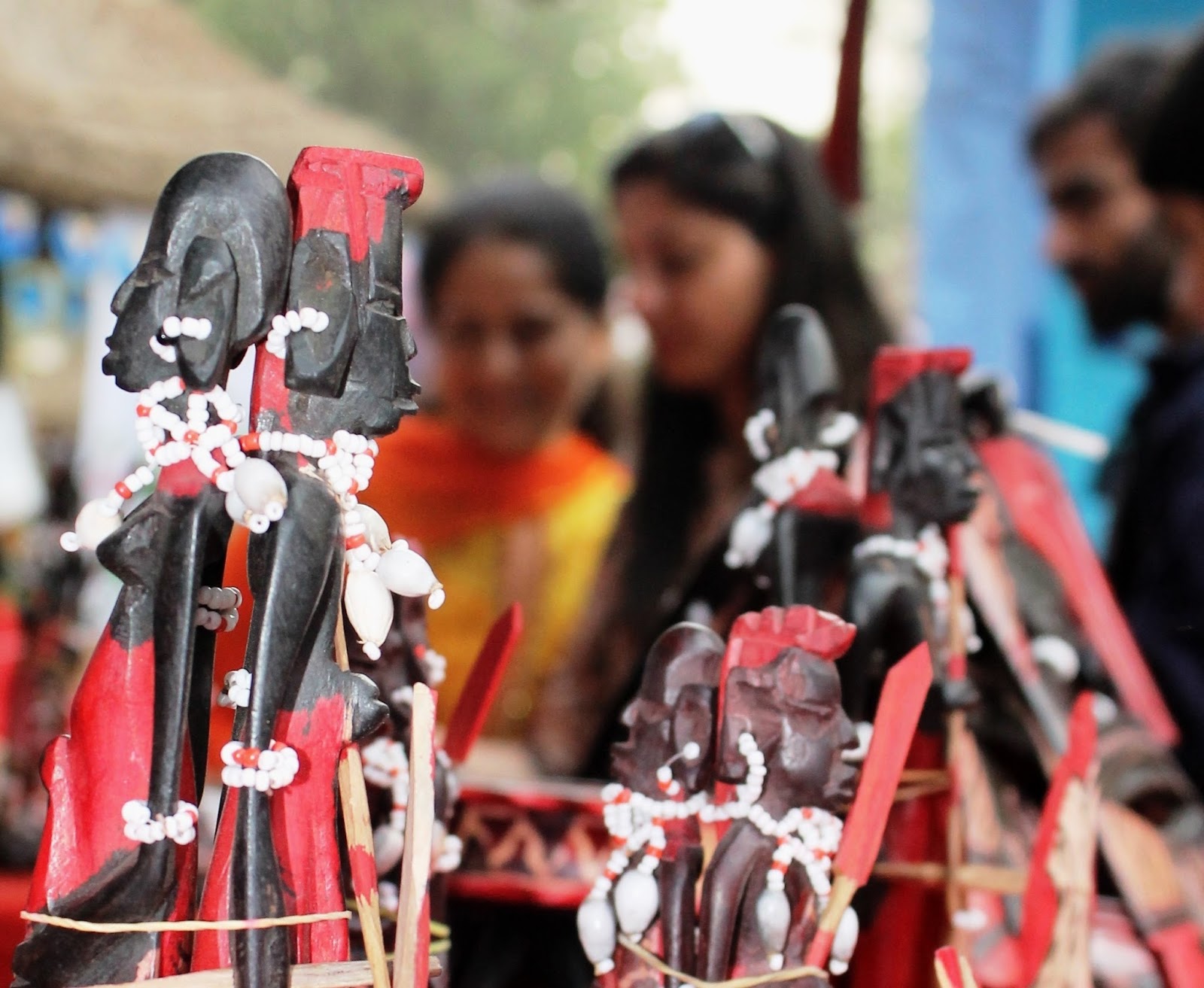
At the Surajkund Crafts Fair - these African wooden carvings vie for attention.

 
A Photograph for posterity. People taking each other's photographs in front of art pieces.

A family Reunion,  brother in law, brother and sister

Tribal Brothers from Bastar


On a lighter note, a portrait of my Brother in Law
A family outing

A candid snap of someone I know

Fluid motion, a photograph of the blogger.