Showing posts with label #macro_photography. Show all posts

Monday, 19 August 2024

Macro Photography - A World That Defies Imagination!

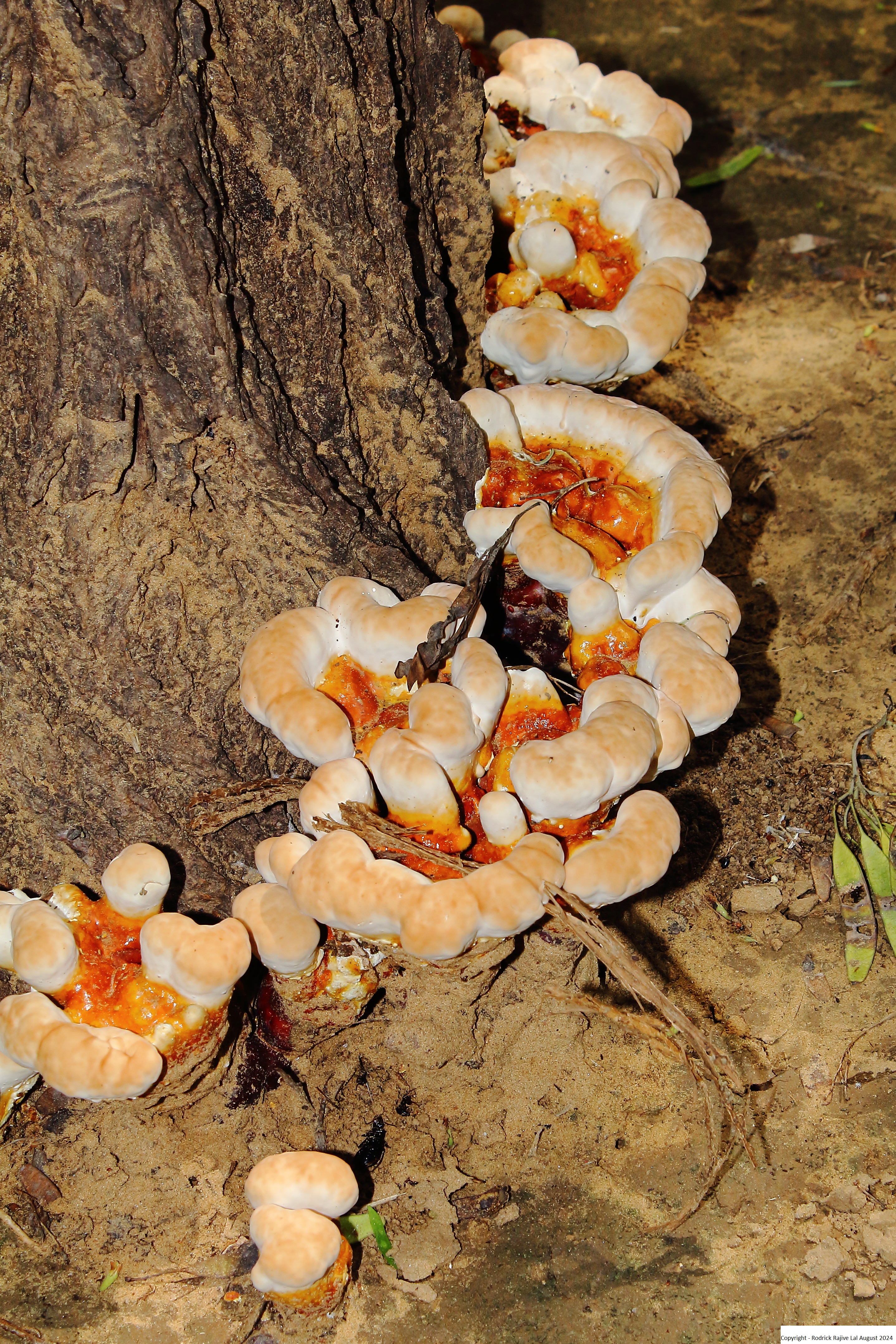
Welcome to the world of Fungi, the most underrated and ignored organisms in the world! Fungi play an important role in recycling waste and in this case, recycling wood. However, in this case, the fungi you see are feeding on the tree they are growing on and in a few years, they will have eaten into the core of the tree forcing it to collapse. These fungi grow up from the tree's roots or even the trunk's very centre. They grow stems, roots or tubes that burrow deep into the tree's roots or the trunk's very centre. The fungus I have photographed might be the big Polyporous Bracket Fungus. In these images, the fungus is a fruiting fungus and these fungi are going through the process of guttation which means that they are exuding water and metabolites produced by fungal cells. These exudates contain mycotoxins, antimicrobials, insecticides, bioherbicides, antiviral and anti-cancer agents. Some of these exudates might contain heparin-like chemicals which if ingested might prevent the coagulation of blood causing the person to die of bleeding! The fungus photographed in this post could be Ganoderma curtisii or the Golden Reishi mostly found in the southeastern United States.


If you look at the photograph above, you will notice the exudates on top of the conk. One of these has a yellowish colour while the other one is light in colour.

Dear reader, welcome to a world rarely seen before! Macro photography opens up a a whole new world never seen before by the naked eye! It highlights the beauty and grandeur of minuscule organisms and nature's creations that have never been seen in real life. Some of the photographs in this blog post are not for the squeamish.

Macro photography opens up a whole new world that looks alien, weird and out of this world. It is challenging to get close to the objects that draw your attention. People use tripods and stuff. though that hampers one's style! A steady hand and a kit lens might suffice for most people, so it does for me. I am amazed by the options open to macro photography and honestly, most of these photographs have been taken handheld, resulting in most cases in my pants at the knees getting muddied by the mud.

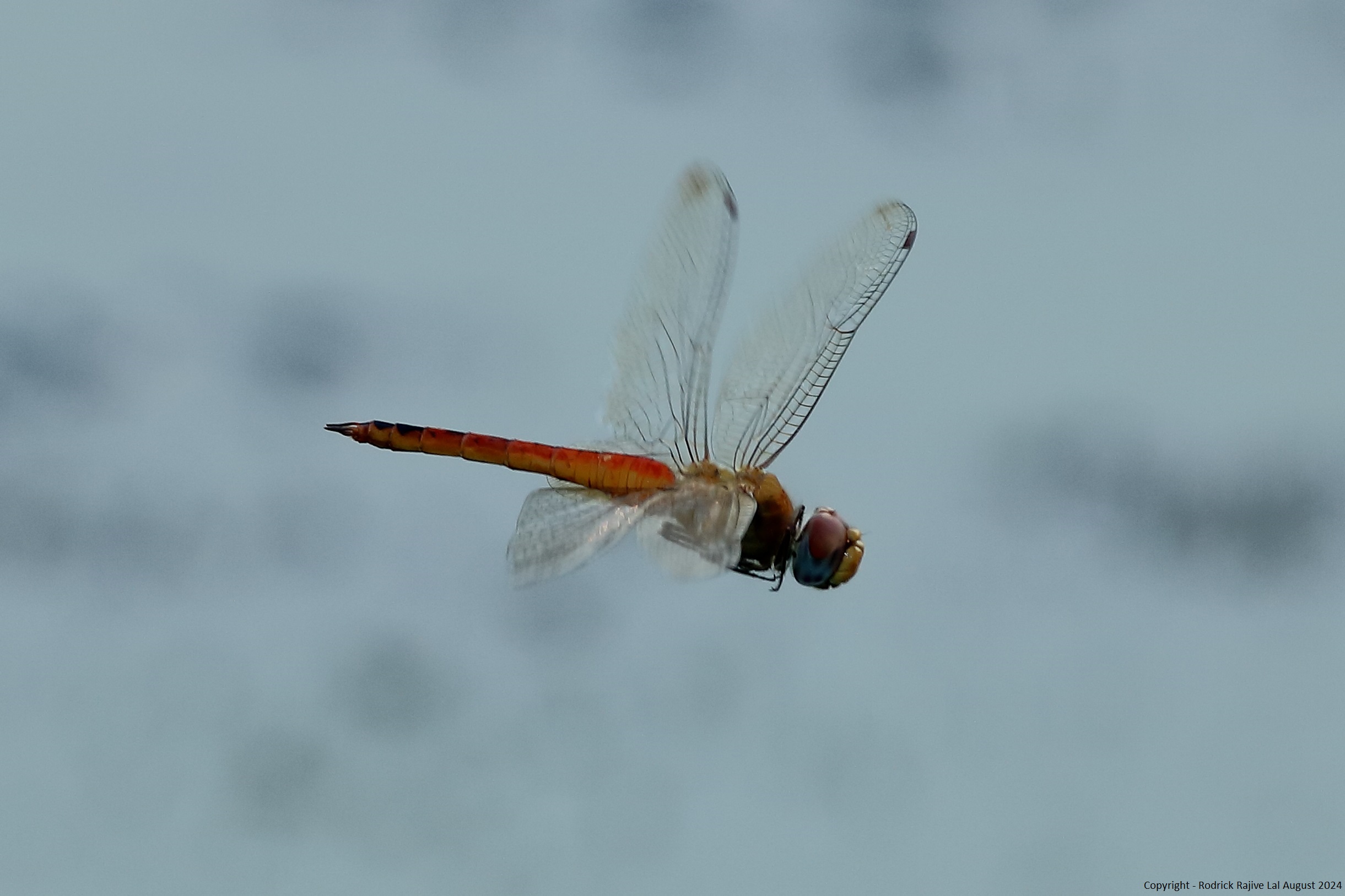
Like fungi, Dragonflies have an important role in maintaining balance in the ecosystem. They eat up all those nymphs or small insects that swarm wetlands or even urban areas that have trees. Of course, the challenge for me was to track the flying dragonfly and focus on it. I was incidentally using a 70-300 mm usm Canon lens, not a good option for macro photography, since it is used for wildlife photography.


The two moths pictured below were shot with an 18-55 mm EFS Canon lens, more suited for Macro photography. The moths photographed below are the Beet Webworm Moths.


The creature photographed below is called the Pale Green Assassin bug. I wonder who its next target might be!

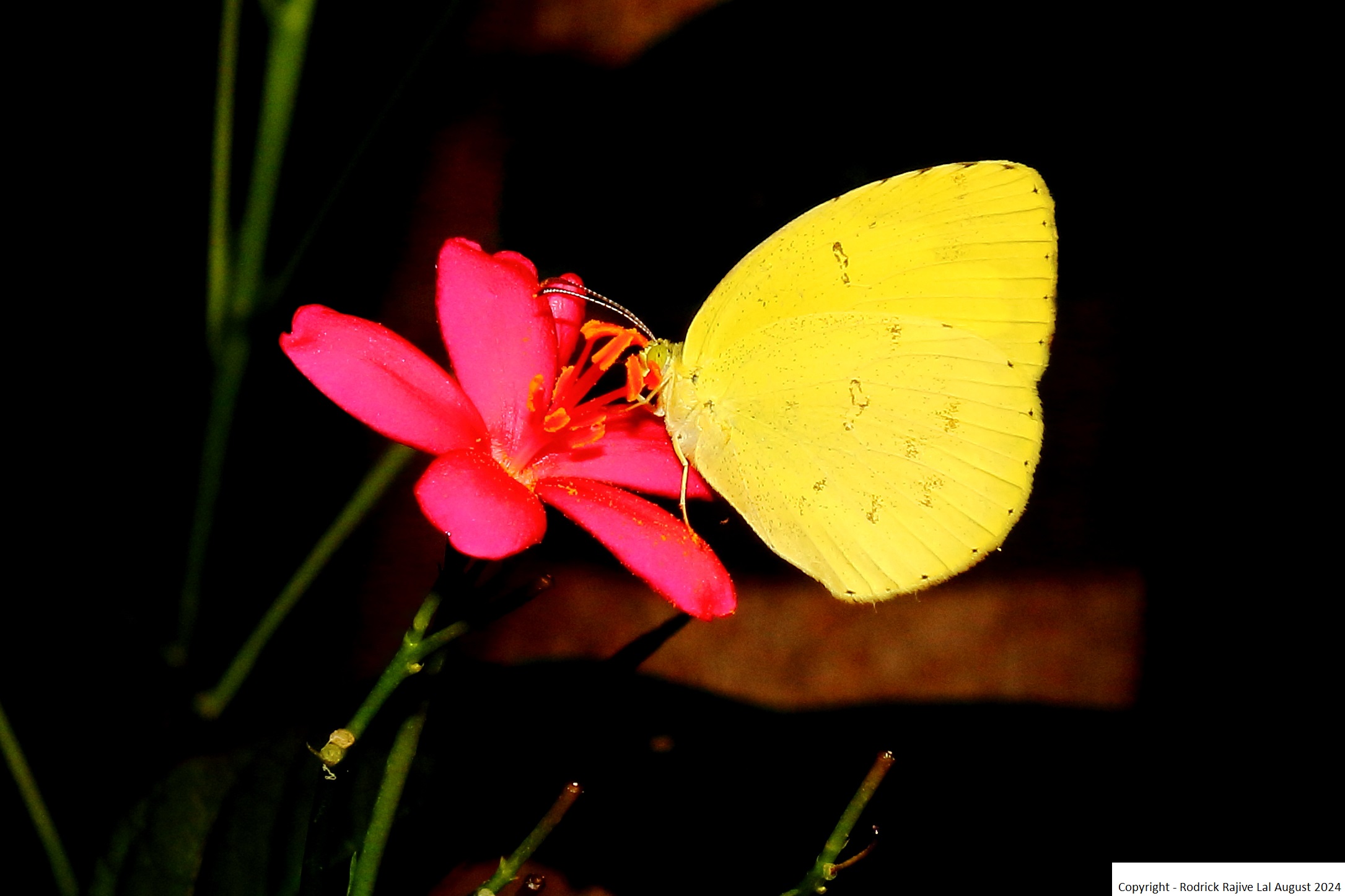
Of course, butterflies can be beautiful and so, to help you feast your eyes on the splendid colours of nature, I am sharing a couple of photographs of butterflies.


Mushrooms are interesting to photograph and they are mostly seen during the monsoon season. The standalone mushrooms grow into full-grown varieties that can be spotted at the foot of trees.


Spiders make for interesting objects to capture in the macro mode. The spider I have photographed below is one that I have seen at my house. Please don't be surprised by the clarity, I took these snaps from the plate glass of the window of my bedroom. This was a tiny spider no bigger than the head of a matchstick. I have seen larger spiders than this one.




Saturday, 23 September 2023

Fun with Macro Photography


Macro photography has much to offer to the enthusiast, especially because one might not have to travel far and wide. In many cases, there will be enough objects to photograph. However, photographing insects will offer more excitement, especially if they are rarely seen insects. Photographing Damsel Flies can be especially rewarding, as photographing Umbonia insects in association with ants.


What is perhaps even more amazing is to see mutualism being exercised between ants and Umbonia bugs. The ants provide protection to the Umbonia bugs and the Umbonia bugs provide the ants with a nutritious liquid.


Moths come in various shapes and sizes and I have been most amazed by some of the moths I have come across. The first one has a rather distinct pattern on its body and it has blue eyes. The next two photographs are those of a moth I spotted at Jim Corbet Park. If you zoom in closely, you will notice that its head looks like that of a wolf or a fox. The last photograph is that of a moth! I would have missed it if it had not been for it flitting across my eyes.


Spiders are my favourites. Most of the spiders that I have come across have been rather shy ones and they will mostly try to hide behind leaves. It is the silent ones that you need to beware of because they might be venomous! My favourite one is called Telamonia dimidiata. It is a rather shy spider and will often slip behind leaves the moment it sees you. Its almost translucent body is difficult to miss.


And of course, who could miss stink bugs. I was able to spot a male, female and infant stink bug recently. Try and see if you can identify the female bug!


Saturday, 9 September 2023

Macro Photography of Bees

It is said that when the bees go, human beings will follow! I have always been fascinated by bees, apart from times when I was stung! Looking at those money bags on their legs bulging with honey is a rare sight. The photographs I am sharing in this post were taken in my school while wandering around in my free time. I used a Canon EFS 18-55 mm lens and a Canon 1300D body.

I used a shutter speed of 1/200 because that is the maximum sync speed between the flash and an f-stop number of 16 to 22. I use a fill in flash to fill in the shadows and get as close as possible to the bees. Using a dedicated macro lens might give sharper images.


Tripods are not for me, therefore I need to be as steady as possible while taking a close-up photograph of a bee. The problem with tripods is that they are unwieldy and bees never stay in one place for long! Having the sun in the right direction is of a great help. 


Saturday, 26 August 2023

Spiders and Caterpillars - Macro Photography of Insects

A Green Swallowtail Caterpillar 

It is surprising how fulfilling Macro-photography can be especially when it throws out results that are surreal! While the challenges might be daunting, patience and persistence pay off. One might not need expensive lenses to take pot-shot of those critters hiding in the bushes, in fact, I use a Canon kit lens (EFS-18-55 mm) on my DSLRs to take my Macro Photographs.

The secret behind getting good photographs is having a steady hand. I don't like lugging a tripod as it restricts your movement. Getting as close as possible to the insect. Using a fill-in flash might become a necessity, especially when the bug is hiding in the branches. I use an ISO setting of 100 to 400, an f-stop number of 6.3 to 25 (depending on the light) and a shutter speed of 1/160 - 1/200. For the focus setting I use the center focus.

Spiders are quite tricky to photograph as they are constantly on the move. While a few of the larger spiders might be a bit sluggish, the smaller ones, like the jumping spiders are very active. Some of the spiders I have photographed turn out to be very shy and camera-conscious. It takes a lot of patience on the part of the photographer to take a decent photograph of spiders.


A female Telamonia spider emerges from her nest of eggs

The three photographs above are of a female jumping spider known by its scientific name as Telamonia dimidiata. This spider rose to fame because of an internet hoax that claimed that it lurked under toilet seats waiting to attack the person. In reality, it is a very shy insect.


The three photographs posted above are those of a spider better known by its Scientific name Epocilla aurantiaca. This spider has red and white horizontal stripes on its back. It is a jumping spider that leap from one branch to another one in a split second.


Caterpillars, however, are easier to photograph because most of them are sluggish. Being longer than spiders, Caterpillars, however, pose a challenge because it might be a little difficult to get a sharp focus on the rest of the body, especially as I like to focus on the eyes. Believe, me, you will fail to identify the real eyes of the Caterpillar because the eyes that you see on top of the head of the insect are not real ones, they are probably meant to deceive predators.


The photograph posted above is that of a caterpillar’s head and it sure looks weird, as if that of an alien creature from outer space. The actual eyes of the caterpillar are closer down near the orange coloured spikes that might be part of its mouth. The two spikes on either side of its head, antennae, in all probability make the creature look more unique.